


Preservatives in Dog Food: What Really Matters
Preservatives often get a bad name. The word alone can sound artificial or unnecessary. Preservatives play an important and practical role in…
Nationwide shipping! Now with Express shipping option as well. Click here for details.

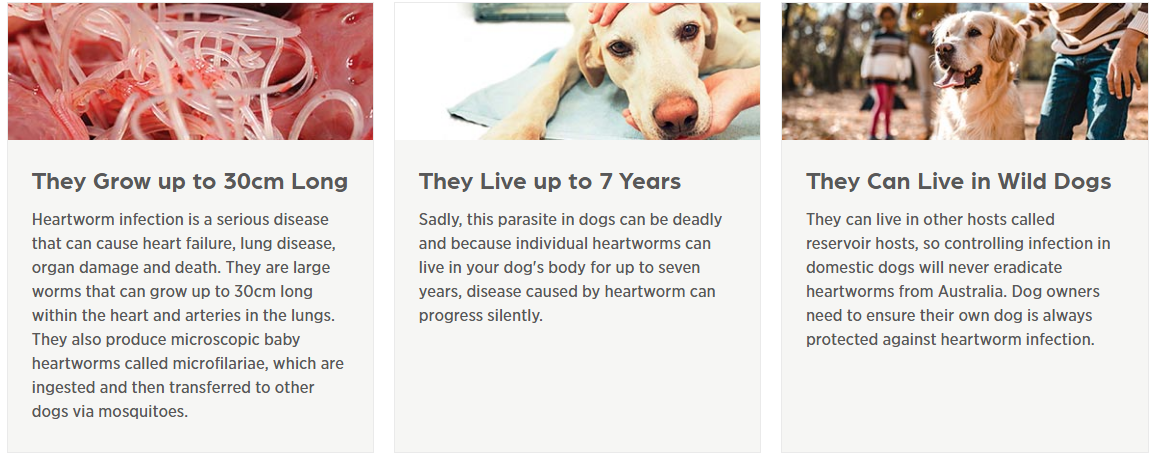
Heartworm is just as serious as it sounds – worms that live in your dog’s heart and lungs. Heartworm disease is caused by a parasite called Dirofilaria immitis and is spread from dog to dog by mosquitoes. Heartworm is endemic in Australia, with more than 2,900 cases reported to Zoetis alone since 2017. Heartworm primarily infects dogs and cats however it also infects wild canids (foxes, dingos, and wild dogs), and the existence of these reservoirs means eradication is impossible. Although rare, heartworm can also infect humans, causing nodules in the lungs, which may be misdiagnosed as cancers or tuberculosis.
Symptoms of heartworm in dogs may include:
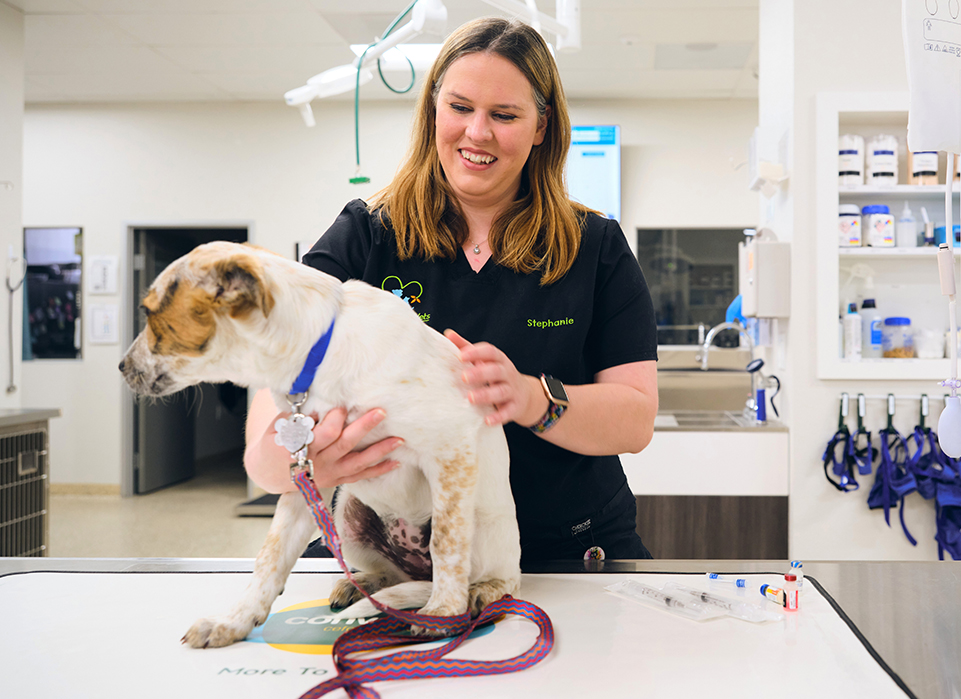
Fortunately, most cases can be detected before symptoms develop, which means treatment can be instigated early if detected early. Talk to your vet about regular testing, even if you are giving regular prevention, just to make sure. Early detection can be the difference. Heartworm disease most commonly affects the heart and lungs, however heartworm can also affect your dog’s liver and kidneys, and cause anaemia from damage to blood cells as well. If you are concerned that your dog may have heartworm, visit your vet immediately. They will be able to perform a series of diagnostic tests to confirm if your dog has heartworm and treat appropriately. All dogs 7 months or older should be tested for heartworm disease at least annually.
If your dog is diagnosed with heartworm infection, it can be treated, but there are many risks involved and success is not always guaranteed. The most severe and acutely life-threatening cases may even require immediate surgery to physically remove adult worms. More routinely, drugs are used to kill the worms and the immune system then needs to remove the dead worm bodies over time. The danger for your dog is that these dead worms break apart and can cause further obstruction and inflammation within the lungs or other organs. Your vet will try and minimise this risk with anti-inflammatory drugs and advise you to restrict your dog’s exercise during this process. Following a diagnosis of heartworm infection, oral medications, injections and exercise restrictions may be prescribed over a period of months for most dogs. There are however a range of options for killing adult heartworms and microfilariae, so if your budget prevents you from accepting the preferred treatment program, ask your veterinarian about other treatment plans. Your vet will also need to repeat diagnostic testing at intervals to confirm success and will prescribe or administer preventative medication to stop your dog being infected with any more heartworms.
It only takes one positive dog with circulating microfilariae to raise the risk of heartworm in the community. An average of 70% of mosquitoes in a heartworm microfilaria-positive dog’s kennel carry heartworm.Recent data says that more people are taking their dogs on holidays, potentially visiting heartworm hotspots, or taking infected dogs to less-infected areas. Travelling dogs not on protection are at risk of contracting heartworm. Unprotected dogs are at risk of contracting it from travelling dogs that bring heartworm with them. Veterinarian Dr Kate Lyne states “it will only be a matter of time before we start seeing greater numbers of heartworm cases in areas thought to be relatively free of the disease”.
PREVENT HEARTWORMS -> SHOP HERE
Great range - quick and secure delivery
Buy securely online and pickup at your local store
Call your local store and come on down to pickup